listyourservices.com
THE most thorough and deep-dive review service for any service-related business
★ Get your own unique FAQ + Selling Points on your profile page
★ be seen by 1000s of daily visitors and win new business
listyourservices.com Miniblog
Repair, Not Replace: The Quiet Sustainability Shift That Cuts Costs
 A machine that lasts longer is rarely invited to a launch party. Yet keeping equipment in service can be one of the simplest ways for a business to cut waste and avoid the cost of buying replacements.
The same practical thinking applies across the workplace. Sorting reusable materials, recycling packaging and keeping closer track of stock can reduce both rubbish and disposal bills. Efficient machinery, LED lighting and better heating controls may cost more upfront, but can bring down energy use over time.
Transport offers savings too. Electric vehicles can suit delivery or service businesses with regular local routes; careful journey planning can trim fuel use even without a new fleet.
There’s a commercial case beyond the bills. Customers and corporate buyers may prefer suppliers with responsible practices, especially when environmental standards are part of procurement. But broad claims about being “green” won’t do much on their own. Measurable reductions in waste or energy use, backed by clear policies, are more convincing.
Not every repair or upgrade pays for itself quickly, and smaller firms have to watch the sums. Still, using fewer resources and making products last longer can serve both the balance sheet and the environment. No brochure required.
Posted on 17 October 2026
The Real Reason Mobile Businesses Can Undercut Traditional Premises
 A shop with a front door, a waiting area and a rent bill the size of a minor cathedral restoration has one obvious problem: somebody must pay for it. Usually, that somebody is the customer.
That is the real reason many mobile businesses can charge less than traditional premises. They often avoid commercial rent, reception costs, utility bills and much of the furniture-and-fitting parade that comes with a fixed site. A mechanic in a van, a dog groomer on your drive, a beautician with portable kit or a computer technician visiting your office can run leaner, and leaner businesses often price more keenly.
The customer gets something rather agreeable as well. No driving across town, no parking hunt, no waiting room archaeology among elderly magazines. Appointments can be arranged around school runs, work calls and ordinary life. For older people, busy families and anyone with limited mobility, that flexibility is more than a nicety.
Technology has made the thing practical. Online booking, digital payments, mobile contact and GPS keep schedules moving and help operators cover a wider area than a single premises might allow.
Of course, the arrangement is not pure sunshine. Travel time eats into the day, fuel costs mount and some services simply need equipment that will not fit into a van. The successful operators know this and price, schedule and define their service areas with military clarity.
Posted on 12 October 2026
Why Generic Testimonials Kill Credibility
 A vague testimonial is the business equivalent of a dating profile that says, “I like fun.” Fine. Meaningless.
People usually decide if they trust a local company before they ever ring. They scan the website, squint at the photos, check the service area, look for signs of life. If the site explains what the business does, where it works, how long it has been doing it and how to get in touch, that already helps. Real, recent photos help more. Customers want proof, not jazz hands.
That is why generic praise falls flat. “Brilliant service!!!” tells me almost nothing. “They fixed our leaking shower and turned up when they said they would” is useful because it sounds like an actual human experience, not something written during a sugar rush.
The same rule applies elsewhere. A properly maintained Google Business Profile matters: correct opening hours, current photos, contact details and recent reviews suggest the business is active. Replies to bad reviews matter too. Anyone can be charming when adored; professionalism during criticism is the real audition.
Trust also grows through practical detail. FAQs about appointments, guarantees and payment methods make a business seem organised. Pricing guides, even rough ones, show honesty. Educational content does too. A roofer explaining common leak causes is quietly persuasive because knowledge is hard to fake.
Posted on 4 October 2026
Customers Read Reviews For One Thing: How You Handle Trouble
 A glowing review is pleasant, but many customers read reviews for a sharper reason: they want to see what happens when something goes wrong.
Five stars matter less than the pattern underneath. People scan recent comments for signs of reliability, quality of work and decent communication, but the telling detail is often how a business dealt with delay, damage, confusion or a complaint. Trouble is inevitable now and then. Evasion is optional.
That same test appears elsewhere. Photos of past jobs help, especially for trades, cleaning, decorating or landscaping, because they show the kind of work a business actually does. Prompt replies help too. Not instant replies, necessarily, just clear and timely ones. A slow, vague message suggests a slow, vague service.
Customers also look for experience, proper insurance and, where it matters, relevant qualifications. These are not glamorous details, but they reduce risk. So does honest pricing. A firm quote is not always possible at first contact, yet a straightforward explanation of charges, call-out fees and likely extras tells people where they stand.
Before anyone hires a local business, they are trying to answer one quiet question: can I trust these people in my home, with my money, and with the job itself? The way you handle trouble often answers it fastest.
Posted on 25 September 2026
Why Online Reviews Still Can't Match One Trusted Friend
 A star rating can look impressive, but it does not calm your nerves quite like one plain sentence from a friend: “We used them. They were solid.”
That matters most with local services. If somebody is fixing your boiler, cleaning your house, repairing your car or drilling into your kitchen wall, you are not buying a biscuit. You are handing over access, money and a bit of peace of mind. A trusted recommendation shrinks that worry in a way glossy adverts rarely can.
Repeat custom says something similar, only more quietly. If someone keeps calling the same electrician, dentist or garage, that is a vote of confidence made with real money. For businesses, those returning customers are gold because trust has already been built.
Over time, a good local name spreads almost by stealth. Turn up when promised, do the job properly, explain things clearly, sort out problems sensibly, and people talk. One happy customer tells a neighbour, a colleague, a cousin down the road. Work appears without ever passing through a search result.
Online reviews help, of course. They are useful for comparing options and narrowing the field. But they are still a crowd of strangers. A person you know carries a different weight entirely.
If your ceiling is leaking, your neighbour’s plumber is often the most convincing recommendation of all.
Posted on 20 September 2026
AI Is Best At The Jobs Your Staff Secretly Hate
 The jobs people worry about losing to software are usually not the jobs anyone was clinging to in the first place. No plumber dreams of spending the afternoon rearranging appointments. No cleaner got into the trade for the thrill of answering “What areas do you cover?” for the ninth time before lunch.
That is where these tools make the most sense. They are good at the bits of service work that are repetitive, low-stakes and strangely exhausting. Booking systems can sort appointments, spot gaps in the day and send reminders without somebody playing diary ping-pong between call-outs.
They can also handle routine customer messages: opening hours, service areas, basic prices, availability. The simple stuff gets answered quickly. The complicated stuff still goes to a person, which is comforting, because no one wants their urgent boiler problem solved by a cheerful misunderstanding.
Quotes are another time drain. If your team keeps writing versions of the same estimate, follow-up email or job description, software can draft it first. Then a human checks the details, changes the price and makes sure it still sounds like the business, not a toaster.
That balance matters. Service companies still run on judgement, trust and practical skill. Customers are paying for people. The smartest use of software is not replacing them. It is removing the admin they were quietly trying to avoid anyway.
Posted on 14 September 2026
Cheap Is Losing: Reliability Has Become The Real Bargain
 The cheapest quote used to feel like a tiny victory. Now it can feel more like flirting with administrative self-harm.
In 2026, customers are getting sharper about what they’re actually paying for. Especially with local services, the job itself is only half of it. The rest is the deeply attractive thrill of someone replying to a message, confirming a time, and then—brace yourself—turning up.
That matters. A slightly higher quote can suddenly look very reasonable if it saves you from sending three follow-up texts, taking a half-day off work and wondering if you’ve been softly ghosted by a plasterer.
Quality plays into this too. A bargain stops being a bargain the moment someone else has to come in and fix it. People who’ve paid twice for one job tend to lose interest in rock-bottom pricing fairly quickly.
And then there’s communication, the unglamorous hero. A quick update, a warning about delays, a message to say the work’s finished—none of it is expensive or complicated. But it makes a business feel solid, organised and trustworthy.
Price still matters, of course, especially when money is tight. But cheap and good value are not the same thing. For plenty of customers, paying a bit more for reliability isn’t indulgent. It’s the smarter buy.
Posted on 8 September 2026
The Small Changes That Make a Local Service Business Feel More Professional
 A two-line booking text can feel more professional than a glossy ad because it does something advertising often cannot: it reduces uncertainty. “Booked for Tuesday, around 10, boiler service” tells a customer the job exists, the time is noted and somebody is in control. Add a quick message saying the engineer is on the way, and the business suddenly feels organised rather than merely visible.
That is the quiet truth about professionalism in local services. People do not usually judge it by office size or marketing spend. They judge it through small moments. A clean van that is easy to recognise. Branded workwear that looks practical rather than fussy. A clear quote that shows exactly what is being done and what it will cost. A digital invoice that is simple to keep. Payment options that do not turn the final five minutes into an awkward scramble.
Then there is the unglamorous stuff, which may matter most. Turning up when promised. Explaining delays before the customer has to ask. Leaving the work area tidy. Sending a short follow-up to check everything is fine. None of this is dramatic. That is precisely why it works.
Customers choosing between similar local firms often look for signs that the job will be handled properly. Tiny signals, repeated consistently, can say more than a big campaign ever will.
Posted on 31 August 2026
The Recovery, Not The Mistake, Is What Customers Actually Remember
 A customer may forgive an error sooner than a clumsy defence of it. The missed appointment, the wrong order, the call never returned: these are common enough in any service business. What lingers is often not the slip itself, but the manner in which the business behaves once caught in it.
A small fault can be inflated into a grand irritation if the customer must explain it three times, pursue updates like a bailiff, or quarrel for a remedy any honest clerk ought to offer at once. There is no mystery here. People dislike inconvenience, but they loathe indifference.
The wiser course is brisk acknowledgement, plain speaking, and a practical fix. That combination changes the temper of the exchange. The question ceases to be, “Who has blundered?” and becomes, “What is being done?”
This matters especially when the problem cannot be solved at once. A delay is easier borne when customers know the cause and the hour of the next update. Silence, by contrast, has a remarkable gift for turning fifteen minutes into antiquity.
Complaints are useful creatures if treated properly. Repeated ones often expose weak scheduling, muddled communication, poor training, or shabby processes. Correct the cause, and future customers benefit.
No one need throw money about in apology. Most people want something simpler: recognition, clarity, and a remedy without ceremony. A mistake may shake confidence; a sound recovery can restore it and, on occasion, strengthen it.
Posted on 24 August 2026
The Most Damning Line In Zuckerberg's AI Manifesto Isn't About AI At All
 The most revealing line in Mark Zuckerberg’s 6,500-word manifesto isn’t the techno-utopian stuff about personal agents managing your diary, drafting messages and organising your files. It’s the claim that “the future is for everyone”.
That’s the problem. Not the slogan itself, but the messenger.
Zuckerberg is trying to recast Meta as the company that puts powerful tools in ordinary people’s hands. There’s a commercial logic to it. Meta isn’t widely seen as leading the top tier of model makers, and it certainly isn’t the first name most people think of for a personal assistant. So this is a bid to own a friendlier lane: personal empowerment, on personal devices, possibly through glasses or wearables, with its Glimmer model doing the daily graft while Muse Spark keeps the premium, more tightly controlled tier.
Lovely in theory. Bit awkward in practice.
Because Meta has spent years promising connection and delivering ragebait, adverts and some truly unsettling chatbots. That history matters. If Zuckerberg says this technology will serve individuals, plenty of people hear: until it serves Meta better.
There’s also the small issue that “for everyone” currently seems to involve specific hardware, which is a charmingly limited interpretation of everyone.
The backlash isn’t just cynicism. It’s pattern recognition. People aren’t rejecting the future. They’re questioning who gets it, who controls it, and why they should trust the man explaining it. Posted on 17 August 2026
Convenience Stores Aren't Supposed To Cater-So Why Is 7-Eleven Doing It Now?
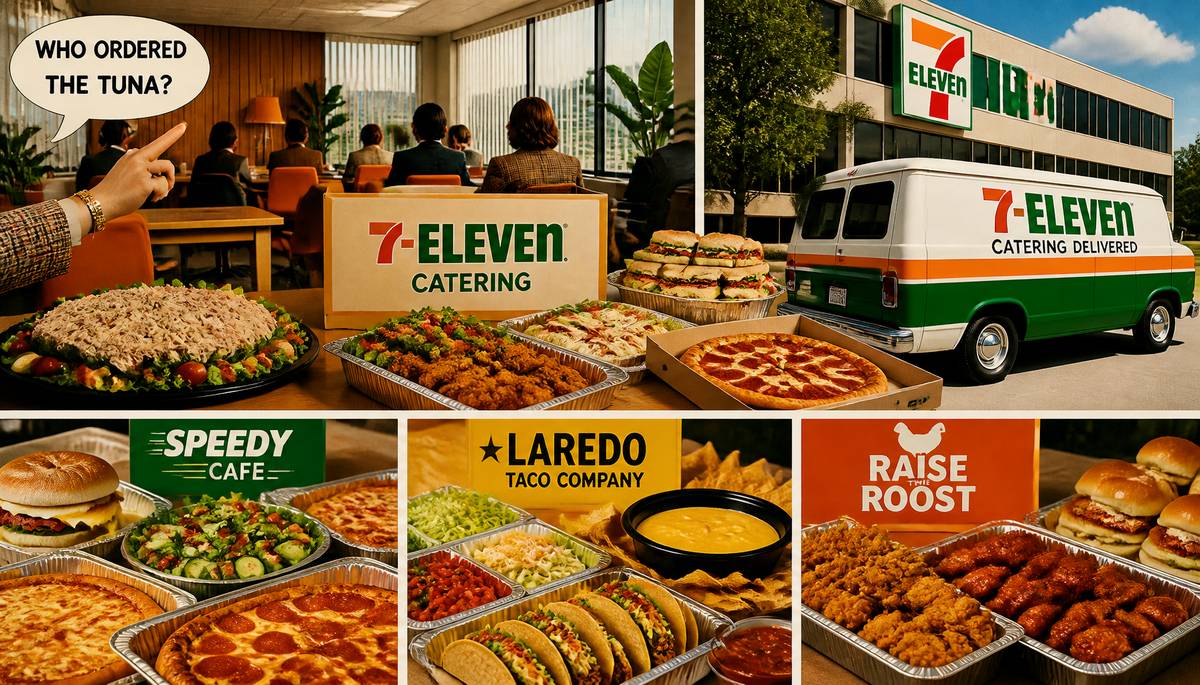 Office catering used to mean a sad platter and one person loudly asking, “Who ordered the tuna?” Now 7-Eleven wants in.
The company has teamed up with ezCater to offer large-format orders from Speedy Cafe, Laredo Taco Company and most Raise the Roost locations. That means pizzas, breakfast sandwiches, salads and lunch boxes from Speedy Cafe; taco bars, breakfast taco boxes, chips and queso from Laredo Taco; and chicken tenders, wings and sandwiches from Raise the Roost.
This matters because it is the first time 7-Eleven has rolled out a national catering programme across its restaurant brands. A few stores had offered bulk orders before, but this is much bigger and much more deliberate.
It also makes surprising sense. Convenience stores are built for solo emergencies: coffee, batteries, a banana at 10.47pm. Catering is the opposite. It is planned, communal and usually paid for by someone expense-account-adjacent. But 7-Eleven has been trying to become more of a food destination for years, opening larger, food-led stores and expanding its quick-service footprint. It opened 30 restaurants in fiscal 2025 and has said it wants to grow from 1,080 stores with QSRs to 2,100 by 2030.
There is also the delivery angle. 7Now brought in nearly $1 billion in fiscal 2025, with a target of $1.25 billion by 2030. If higher petrol prices keep people from driving to the shop, catering trays delivered to the office start to look less odd and more inevitable.
Posted on 13 August 2026
Why Is A Booming Service Economy Quietly Cutting Jobs?
 The odd thing about a healthy service economy is that it can still quietly mislay jobs like a man losing a kipper in a duvet.
America’s services sector kept growing in July. The Institute for Supply Management’s services gauge edged up to 54.1 from 54.0 in June, with anything above 50 showing expansion. That makes 74 straight months of growth, and on ISM’s usual reading, July’s figure points to annualised real GDP growth of about 1.9%.
So why the unease? Because the jobs measure went the other way. The employment subindex dropped to 47.4 from 51.2, which signals contraction. In plain terms, firms are still doing business, but not necessarily hiring for it.
That can happen for a few reasons. Some companies appear to be producing more with fewer people, helped by new technology and tighter staffing. Survey responses also pointed to work moving abroad, with lower headcount in the US and more roles in India and other cheaper locations. One respondent also noted an increase in H-1B visa use.
There was less chatter than before about tariffs and the conflict in the Middle East, suggesting those pressures have not vanished, but are no longer dominating every conversation.
The picture, then, is sturdy but slightly peculiar: demand is holding up, output is rising, yet payrolls are thinning. Growth, yes. Broad-based job creation, not quite.
Posted on 8 August 2026
Online Reviews Are Rewiring How Customers Judge Reliability
 People used to shop for services like they were hunting for bargain socks: cheapest first, questions later. In 2026, that habit is fading. Price still matters, of course. But plenty of customers have learnt that a low quote can become an expensive life lesson.
Reliability now carries real weight. If a plumber answers quickly, an electrician turns up on time, or a web designer keeps you updated instead of vanishing into the digital wilderness, people notice. Fast replies and clear communication create trust long before the work is finished.
Then there’s the quality problem. A cheap job done badly is rarely cheap for long. It can mean more repairs, lost time and the special kind of frustration that comes from paying twice for the same problem. Spending a bit more on someone experienced often works out better value.
Online reviews have pushed this shift even further. Customers can now scan a business’s track record in minutes: did they meet deadlines, behave professionally, and deliver what they promised? Those shared experiences often matter more than a small saving.
Reliable firms also earn something discounts can’t buy: repeat business. People return to companies that make life easier, and they recommend them to friends, family and neighbours. Competitive pricing still has its place, but dependable service is increasingly what seals the deal.
Posted on 31 July 2026
The New Luxury Is A Real Person On The Line
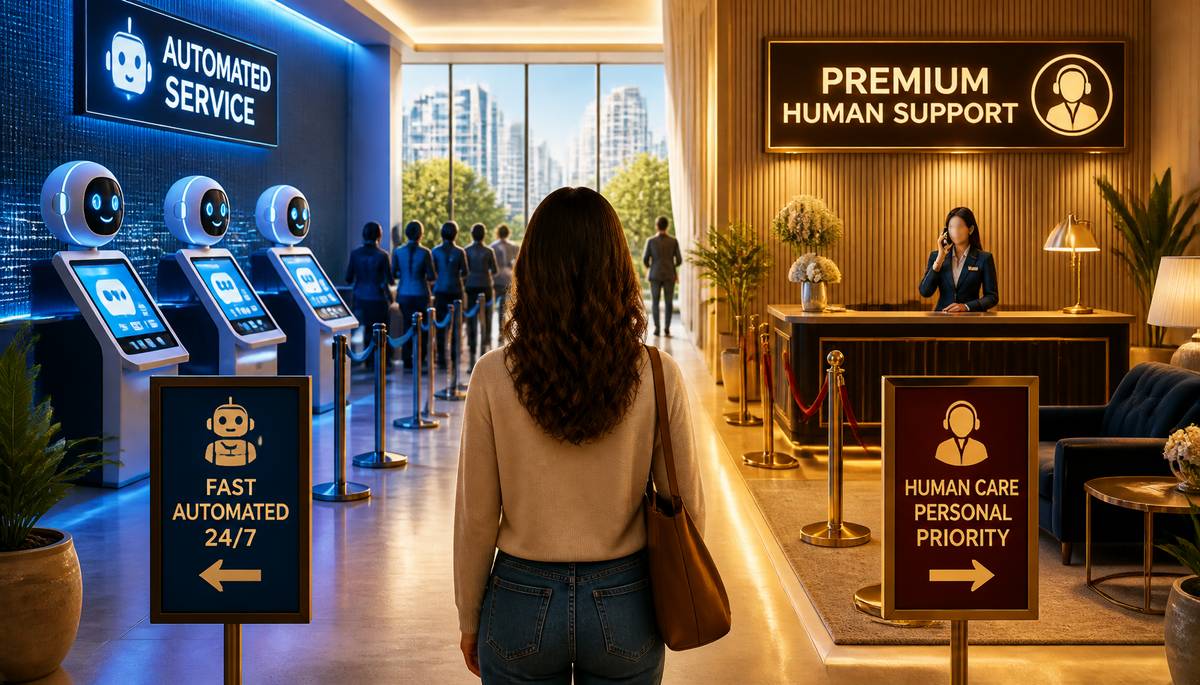 A strange status symbol is taking shape: not a handbag, not a hotel suite, but an actual human answering the phone.
New research from Medallia suggests many people think routine customer service will soon be handled mostly by machines, while human support gets reserved for higher-paying customers. More than two-thirds of consumers expect basic service to be machine-led within a decade, with real people becoming part of premium experiences. That is both efficient and, frankly, a bit bleak.
Nearly half of those surveyed think that in 10 years they may not deal with companies directly at all, because a digital agent will do it for them. Very modern. Also slightly dystopian.
The catch is that people still trust people more. Separate survey findings show more than three-quarters of consumers say human contact often or always leads to better customer service outcomes. Customers are also willing to pay extra for empathetic, person-to-person support, and more than four in five say they are more loyal to brands that prioritise human help over purely automated options.
There is also very little patience for machine mistakes. Medallia found only 7% of consumers are more forgiving of automated errors than human ones.
Some brands are paying attention. Nordstrom, for one, has said the human connection is central to making customers feel recognised and valued. Which makes sense. Efficiency is lovely, but being treated like a person still feels expensive because, increasingly, it is.
Posted on 25 July 2026
Record Profits, Record Complaints: The New American Business Model
 American companies have pulled off a neat little trick: they’ve made customers miserable and shareholders ecstatic at the same time.
Take Delta charging one traveller $1,200 to switch a flight, prompting her to fly to northern Mexico and cross by bus rather than pay up. That sounds absurd because it is. But it also makes perfect sense in an economy where many firms know you’re cornered.
Complaints are soaring. The American Customer Satisfaction Index says they rose 16% in the first quarter of 2026, even as customer retention went up too. That’s the maddening part: people stay because the alternative is often just a different logo on the same rotten experience. In airlines, four carriers control nearly 70% of the market. In groceries, four producers dominate many staple categories. In broadband, plenty of households are effectively stuck with one provider and one hold-music nightmare.
Meanwhile profits are booming. Corporate profits reached $3.9tn in the first quarter of 2026, after hitting a postwar high of 15.8% of GDP late in 2025. Workers’ share has fallen below 10%. That gap, economists warn, is a measure of inequality as much as efficiency.
This is the new business model: charge more, serve worse, dare people to leave. The good news is that resistance is growing, from local broadband schemes to state action on junk fees and personalised pricing. About time, really. Posted on 19 July 2026
The Cheap Offshore Advantage Is Suddenly Looking Fragile
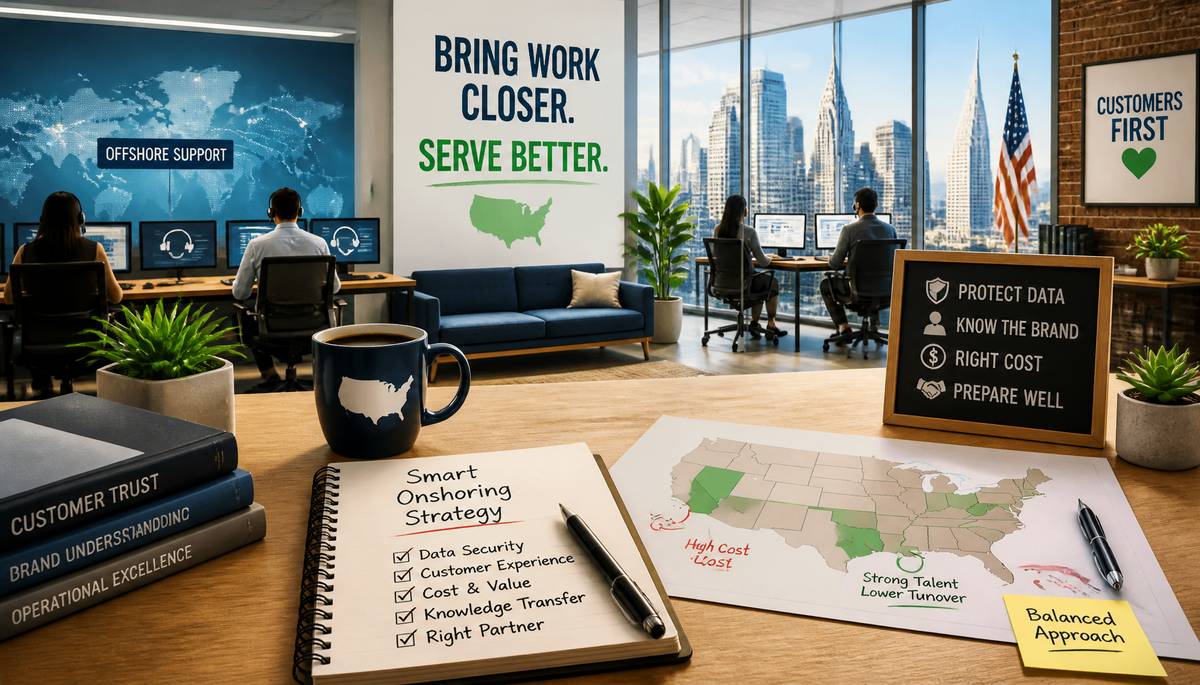 Cheap offshore support, once treated as the sensible economy of modern business, is no longer quite so secure in its reputation. A proposed FCC rule, now under consultation until 22 June, has prompted firms to reconsider keeping contact centres abroad, especially where customer data and regulatory risk are concerned.
The case for bringing work back is not merely patriotic, nor even purely legal. Companies handling payments, account details or health information may prefer tighter control and fewer handovers. In financial services and healthcare, that argument is especially strong. There is also the less measurable matter of brand understanding: a customer adviser who knows the shop, restaurant or service first-hand may represent it with greater ease and accuracy.
Yet onshoring is not a commandment to repatriate everything. For many businesses, the wiser arrangement will be mixed: keep some functions offshore, place others nearer home, and move the most sensitive or brand-critical work onshore.
Cost, meanwhile, is less decisive than it once was. Pricing across domestic and overseas outsourcing has shifted, and the old assumption that foreign always means cheaper is looking fragile. Still, location within the U.S. matters. New York and California may be costly; rural areas may offer steadier staff and strong motivation.
Any move, however prudent, must be prepared properly. The transition succeeds or fails on knowledge transfer, training and early conversations with potential partners about capacity, location and price.
Posted on 14 July 2026
Japan Built A Foreign Hiring Pipeline-Then Froze It Mid-Flow
 Japan spent years building a channel for foreign labour, then pinched it shut just as restaurants learned to rely on it. Since April, new entries to the food service sector under the Type 1 Specified Skilled Worker visa have been suspended in principle because the category is close to its cap of 50,000.
That matters. These workers were not casual stopgaps. They arrived with either roughly three years of hands-on experience, often through the trainee system, or by passing Japanese language and sector skills tests. For many employers, that made them ready for full-time work from day one.
In Osaka, Chibo Holdings says around 70 Type 1 workers, mostly from Asia, make up about 30% of its workforce. The company had planned to hire 20 to 30 more next year. Now those plans are being redrawn. Another Osaka operator, Shinsaibashi Mitsuya, dropped recruitment interviews in Vietnam altogether.
The rise had been swift: food service reached about 46,000 workers, more than tripling in a little over two years to February. The ceiling remains in place until the end of March 2029, though admissions could resume if enough workers leave when their terms expire.
Japan’s food service industry employs about 4 million people, including an estimated 300,000 foreign nationals. Type 1 workers are only a slice of that, but a crucial one: trained, tested and dependable. Freeze the pipeline too often, and the message abroad is simple. Japan is hiring, until suddenly it isn’t. Posted on 6 July 2026
After the Quake, Venezuela Enters the Harder Part
 Six days after the twin earthquakes struck central-northern Venezuela, the country is entering the phase disaster knows best: when the noise of collapse gives way to shortages, sickness and queues.
La Guaira, the worst-hit state, faces severe food scarcity. Basic services have failed, communications are largely down, and aid bottlenecks are sharpening tensions. Across La Guaira, the Capital District, Miranda, Aragua and Carabobo, a rapid UNHCR assessment found roughly half of survivors staying with relatives or neighbours; nearly 40 percent are in streets, churches, schools and other improvised shelters lacking privacy, hygiene and safety. Unaccompanied and separated children were also identified.
By Monday, authorities had recorded 1,719 deaths, at least 5,034 injuries and 15,866 people affected or displaced.
The health system is buckling. WHO verified 21 facilities across Caracas, La Guaira, Miranda and Falcón: three are in critical condition, six are damaged or only partly working, and the rest are operating under heavy strain. Overcrowding, surgical backlogs, weakened biosafety, failed morgue and forensic services, poor casualty registration and missing-person tracking are compounding the crisis.
Disease risk is climbing fast: measles, diphtheria, pertussis, yellow fever, dengue, chikungunya, Zika, oropouche and malaria are all concerns, worsened by low pre-quake vaccination coverage. Several health workers in La Guaira remain missing, including staff covering maternal care.
On Tuesday, UNICEF flew in 47 metric tons of supplies from the EU stockpile in Copenhagen. Together with an earlier shipment from Panama, the aid should reach more than 100,000 children and families over three months, though 680,000 children need help. UNICEF is seeking $52 million. Posted on 2 July 2026
As AI Shakes Office Work, Skilled Trades Gain Ground
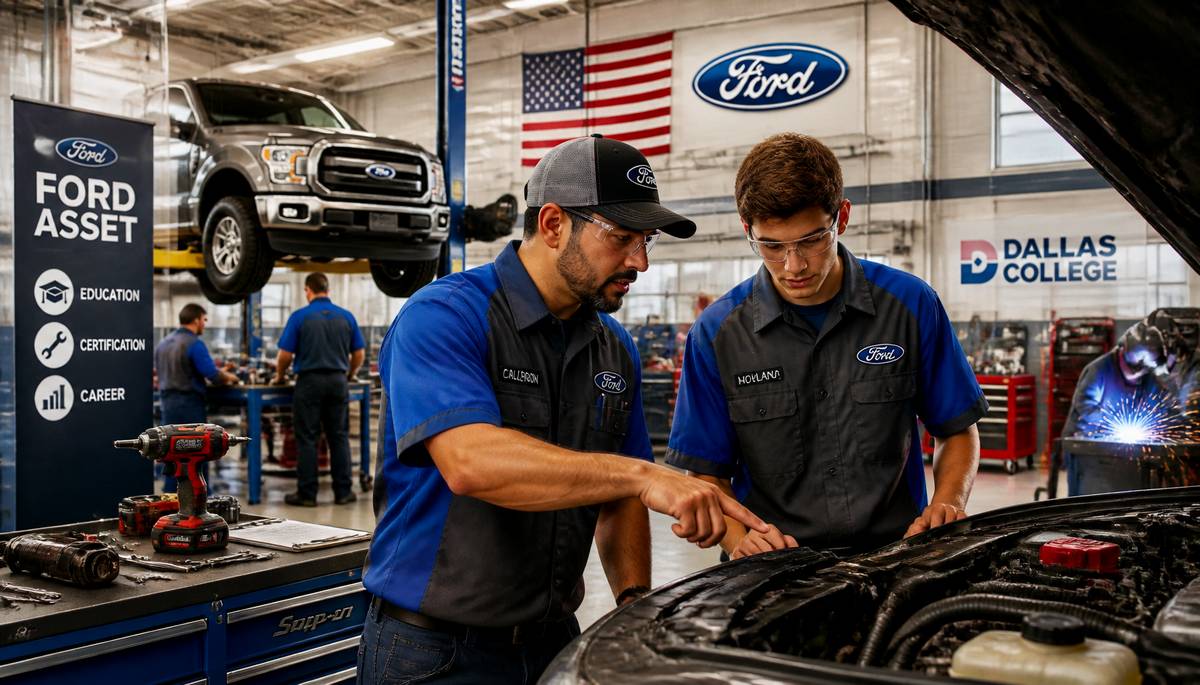 While a lot of white-collar workers are staring at AI like it just CC’d itself on their job description, interest in hands-on careers is climbing for a reason: those jobs still need actual humans.
Michael Hovland, raised in the Mid-Cities area, learned car repair beside his father as the family worked to save money. After graduating from L.D. Bell, college did not feel financially possible, so he moved straight into full-time work as a service technician at Sam Pack Ford in Fort Worth.
Then the path widened. Encouragement from shop foreman Roger Calderon led Hovland to industry certifications at Dallas College and a degree alongside dealership work. Now 20, he is set to graduate with honors next month, debt-free, backed by teachers, counselors, success coaches and his employer. What began as a solid technician job has turned into a broader future that could include management or sales.
Dallas College says the Ford ASSET program reflects how it partners with local employers to shape training around real workforce demand.
Calderon knows the route well. He also came through Ford ASSET, later taught in the program, and now helps younger technicians build careers rather than just hold jobs.
Automotive service is part of a larger pattern. Community colleges are steering students toward certifications in plumbing, HVAC, welding and electrical work—fields offering stronger pay and less exposure to AI disruption. In these trades, technology may assist, but judgment, improvisation and human touch still close the repair. Posted on 22 June 2026
Meta Turns Facebook Search Into an AI Digest of Its Own Crowd
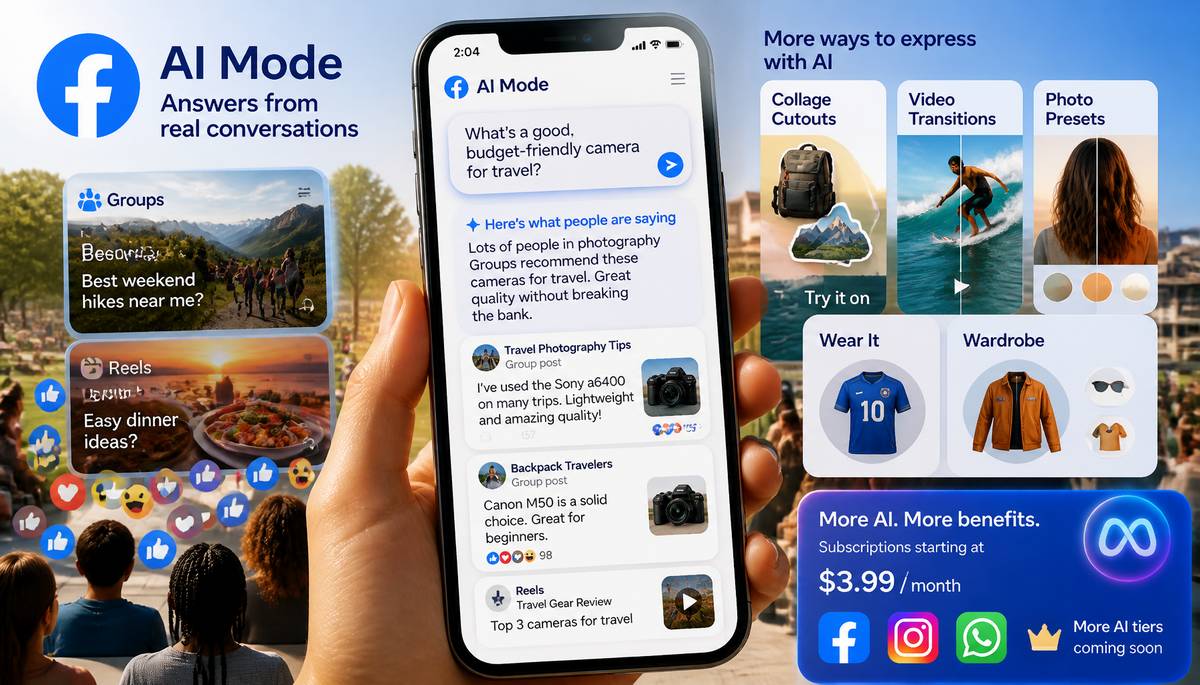 Facebook is being refitted into a kind of conversational mirror, one that answers questions by riffling through the public speech of its own vast population. Meta’s new AI Mode, announced Monday, lets users search in plain language and receive synthesized responses drawn from public Facebook posts, including Groups and Reels, rather than a list of links to sift through.
The move extends a direction Meta began last month with Forum, its Reddit-like app, whose Ask tab similarly pulls answers from discussions in Facebook Groups. The promise is immediacy: not what the web says in the abstract, but what people are saying now. The hazard is equally clear. Because these summaries are built from ordinary user chatter instead of vetted authorities, stale claims and bad information can be laundered into something that looks authoritative, much as critics have warned about Google’s AI Mode on Reddit.
Search is only part of the package. Facebook is also adding AI tools for collage cutouts, video transitions, and photo presets that can alter clothes, hairstyles, and accessories. In Stories, users can tap AI Edit and choose Wear It to try on a team jersey; profile pictures can be restyled through Wardrobe.
These arrive after animated profile pictures in February, Marketplace auto-replies in March, and a creator assistant earlier this month. The broader design is clear: make Facebook more adhesive, and broaden revenue through subscriptions, now sold globally across Facebook, Instagram, and WhatsApp from $3.99 a month, with more AI tiers expected.
Posted on 16 June 2026
The Touchscreen Takes the Shift
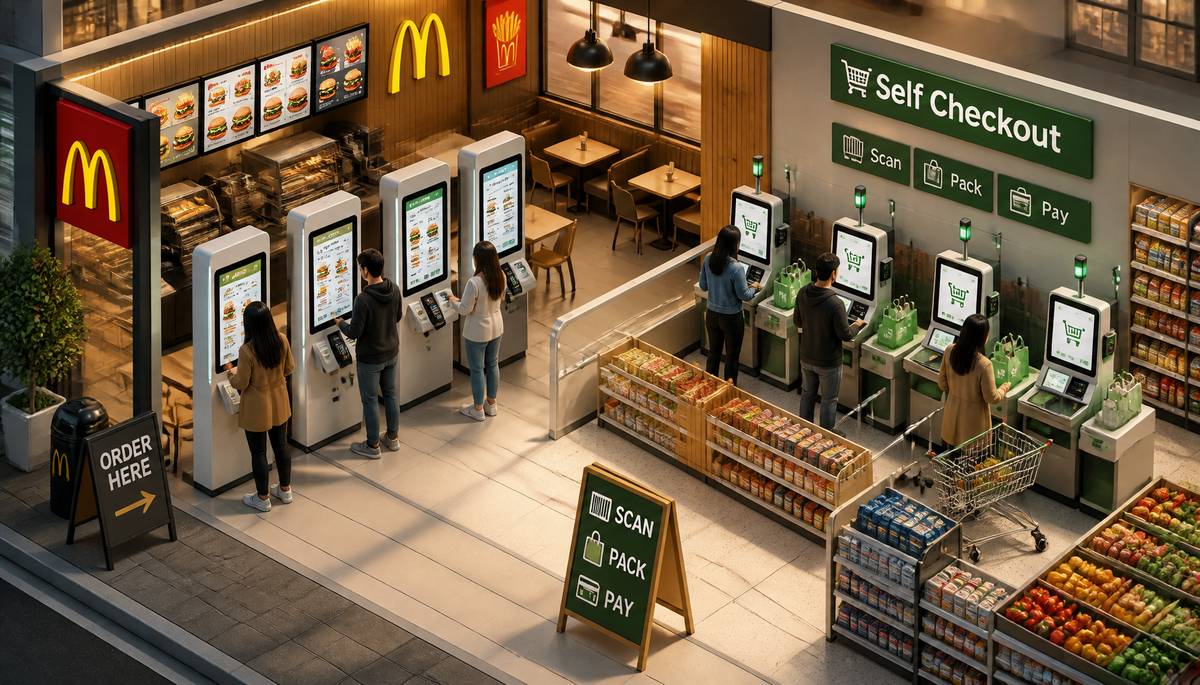 Britain has a neat little racket masquerading as modern convenience: the customer clocks in without ever getting a wage slip.
Step into a McDonalds now and the first face likely to greet you is a touchscreen, bright as a fruit machine and about as warm. At the supermarket, the drill is much the same. You scan the goods, pack the bag, handle the payment, and if anything goes wrong you go hunting for one of the few staff left on the floor, already stretched thin keeping the whole show from coming apart at the seams.
The sales pitch is efficiency. Self-service is sold as quicker, leaner, easier. Maybe sometimes it is. But the arithmetic is plain enough: work once done by employees has been quietly pushed onto the public, while the savings stay with the business.
That swap has cost more than jobs on a rota. It has drained some life out of buying and selling. The corner-shop cashier who knew your face, the person behind the counter who remembered your usual order, the passing chat that stitched a day together—those small exchanges mattered.
Britain is already a lonely place for plenty of people. Still, shops and fast-food chains keep stripping out ordinary contact and replacing it with screens. On paper, that may look streamlined. In the flesh, it leaves the high street feeling less human and more like a warehouse with mood lighting.
Posted on 9 June 2026
The Restaurant Future: Surviving the Age of Thin Margins
 Restaurants are entering a leaner age. Deloitte research shows consumers are less inclined to spend on dining out than they were two years ago, after a brief post-pandemic lift. In 2024, 20 major restaurant chains went bankrupt, the highest count since 2020.
A survey of 150 restaurant executives found pressure across the business: weak traffic, stubbornly high costs, and the strain of serving customers whose habits keep changing. Many operators are responding with sharper digital tools, menu changes, stronger everyday value, and cost-cutting. Useful moves, but often too narrow for a harsher market.
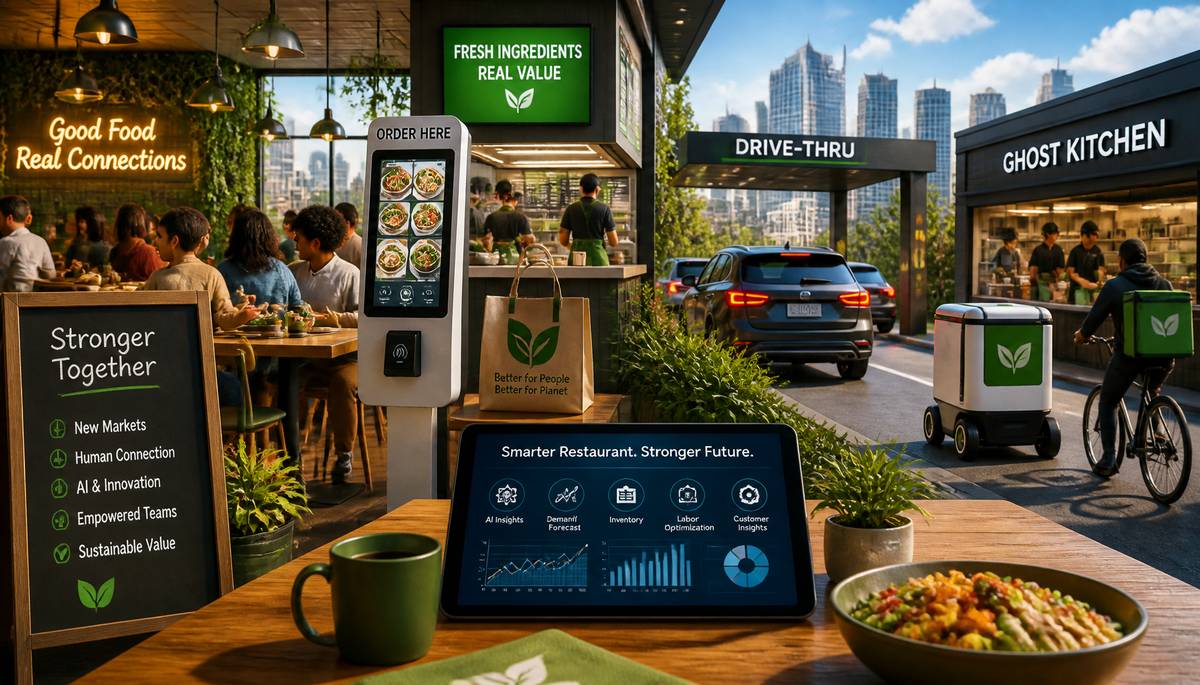
Six larger forces are reshaping the field. Consumers are more diverse and less reachable through one-size-fits-all marketing. Technology is advancing while many chains still depend on aging systems. Convenience expectations have risen since delivery surged during the pandemic, pushing restaurants toward kiosks, extra drive-thru lanes, and ghost kitchens. Those channels add operational complexity. Economics are thinning: 88% of executives in a recent Deloitte survey named input costs, including labor and materials, as a top concern. Environmental pressures, from natural disasters to waste and energy use, add further strain.
The strongest path forward appears broader: seek new markets and occasions; pair convenience with human connection; use AI, including GenAI and AI agents, to improve speed, accuracy, logistics, and efficiency; build a workforce with new skills; and treat sustainability as a source of value, not just obligation.
Posted on 8 June 2026
Why Callers Still Ask for a Human
 For many years the merchants of commerce have set great hope in artificial intelligence, believing it would remake the phone helpline: shortening delays, trimming expense, and hastening answers for those in need. Out of that hope came automated menus, speaking assistants, and conversational bots, sent forth across banking, insurance, telecommunications, and utilities.
Yet the common end of many such journeys is strangely small and telling. Callers often return again and again to a single plea: agent.
The weakness is plain enough. These systems may manage simple matters well—checking a balance, resetting a password, or guiding a routine request. But when a case strays from the beaten road, they falter. Context slips from their grasp; nuance is missed; unusual circumstances confound them.
So the customer is led through a wearying passage: verification answered once, the trouble explained to the machine, and then the whole tale spoken anew when at last a human representative is reached. What was meant to remove friction often multiplies it.
Businesses persist because automation cuts staffing costs. But satisfaction surveys often show a harsher reckoning. Many callers do not experience AI as help, but as a gate to be passed. Hence the rise of online advice devoted to bypassing automated systems.
Customer service is not only the finding of information. It also asks for judgment, flexibility, and empathy—gifts still more readily found in a person than in a bot.
Posted on 6 June 2026
Britain’s Service Sector Loses Its Footing as War and Costs Chill Demand
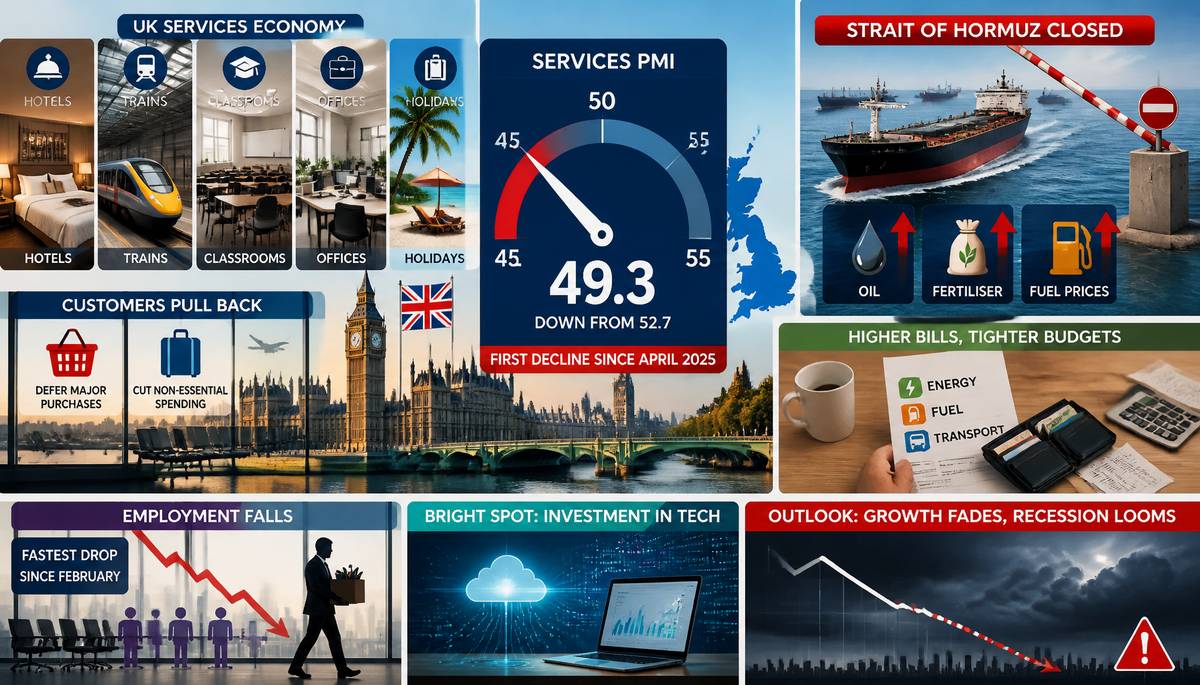 In May, Britain’s service economy — that vast house of hotels, trains, classrooms, offices and late-booked holidays — slipped out of growth for the first time since April 2025.
S&P Global’s UK services PMI fell to 49.3 from 52.7 in April, crossing below the 50 mark that separates expansion from decline. The retreat was tied mainly to a third straight monthly drop in new business, though the easing was described as slight rather than severe.
The strain showed most plainly where spending is easiest to postpone. Hospitality, leisure and travel businesses reported customers deferring major purchases and cutting non-essential outlays as the war in Iran darkened confidence. Export sales also weakened, reflecting both fragile global conditions and fiercer competition in key markets.
The conflict’s effects have spread far beyond the region. Since the end of February, the effective closure of the Strait of Hormuz has disrupted one of the world’s busiest shipping routes, choking flows of oil and fertiliser and pushing prices sharply higher. In Britain, those costs have filtered into energy, fuel and transport bills, tightening household budgets and depressing sentiment.
Employment in the sector fell at its fastest pace since February as firms responded to higher labour and operating costs. One rare brighter note came from continued investment in technology services.
Economists now expect growth to fade further and recession to loom in the second half of the year.
Posted on 4 June 2026
listyourservices.com (c)2009 - 2026