Deep Clean vs Regular Tidy and Why Surfaces Remember
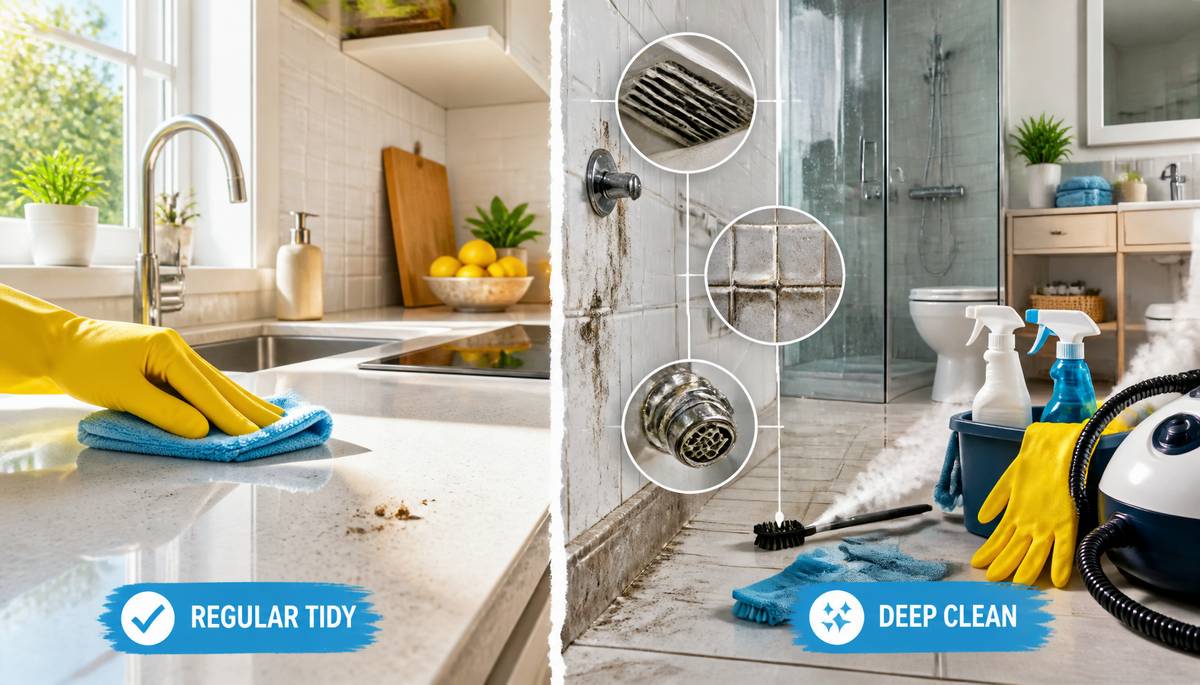 A freshly wiped counter can look innocent enough, quietly gleaming as if it has nothing to hide. Unfortunately, surfaces are excellent liars. What looks clean and what is clean are often only distant acquaintances, nodding politely across the room but never truly meeting. Understanding the difference between a regular tidy and a deep clean is less about perfectionism and more about knowing when appearances stop being useful.
What a Regular Tidy Actually Does A regular tidy is the everyday maintenance that keeps a space functional and socially acceptable. It is the kind of cleaning that happens before guests arrive, during a rushed weekday evening, or when crumbs start forming their own small communities.
This type of cleaning focuses on visible mess. Floors are vacuumed, surfaces are wiped, bins are emptied, and bathrooms receive a quick refresh. The goal is not transformation but control. Dirt is reduced, clutter is managed, and nothing actively sticks to your socks.
There is real value here. Regular tidying prevents grime from building up too fast and keeps spaces usable. It also protects mental well-being. Walking into a reasonably orderly room feels different from stepping into chaos, even if both rooms are hiding the same secrets beneath the surface.
What Deep Cleaning Really Means Deep cleaning is what happens when cleaning stops being polite and starts asking difficult questions. It targets the places regular tidying avoids, forgets, or simply cannot reach without effort.
This process involves breaking down accumulated dirt, grease, bacteria, and residue that build up over time. Think of limescale behind taps, dust layered inside vents, grime embedded in grout, and grease quietly hardening where heat and hands meet most often. These are not cosmetic issues. They affect air quality, hygiene, and how long surfaces remain usable.
Deep cleaning usually requires more time, stronger products, and occasionally tools that feel mildly judgemental. Toothbrushes, scrapers, steamers, and the sudden realization that something has not been cleaned since it was installed all tend to appear at once.
Health Is Where the Difference Gets Serious While regular tidying reduces surface-level germs, deep cleaning tackles the environments where bacteria and allergens actually thrive. Dust mites, mould spores, and grease-loving microbes are not particularly impressed by a quick wipe.
In kitchens and bathrooms especially, deep cleaning helps limit cross-contamination and reduces lingering odours that are not coming from nowhere. For households with allergies, pets, or children, the difference can be noticeable. Breathing feels easier. Surfaces feel genuinely clean rather than temporarily forgiven.
Why Appearances Are Only Half the Story A space can look immaculate while quietly damaging itself. Dirt trapped in carpet fibres shortens their lifespan. Grease left to harden on surfaces makes future cleaning harder. Limescale slowly corrodes fixtures while pretending to be decorative.
Deep cleaning restores materials closer to their original condition, which extends how long they last. Regular tidying keeps things presentable. Deep cleaning keeps them alive. One handles the now. The other protects the later.
When a Regular Tidy Is Enough Not every situation calls for gloves that reach the elbows and a playlist long enough to measure time in albums. Regular tidying works well when dirt has not had time to settle in or get emotionally attached to the building.
Daily or weekly upkeep is usually enough for low-traffic areas, short-term mess, and spaces that are already in good condition. Desks, bedrooms, and lightly used living areas benefit most from consistency rather than intensity. Small actions repeated often do far more work than one dramatic cleaning day followed by months of neglect.
Regular tidying is also ideal when time, energy, or motivation is limited. A ten-minute reset prevents problems from escalating. It keeps the baseline respectable and avoids the moment when cleaning turns into archaeology.
When Deep Cleaning Becomes Non-Negotiable Deep cleaning earns its place after long periods of use, seasonal changes, renovations, illness, or neglect that was not intentional but happened anyway. Kitchens and bathrooms usually reach this point first, followed closely by floors, upholstery, and anything involving water or heat.
Certain signs are reliable indicators:
- Lingering smells that survive air fresheners
- Discolouration that wiping does not fix
- Dust returning suspiciously fast
- Surfaces that feel sticky despite looking clean
At this stage, tidying alone becomes cosmetic. Deep cleaning resets the environment and prevents minor issues from becoming expensive repairs or health concerns. The Psychological Shift of Going Deeper There is something oddly grounding about deep cleaning. It demands focus, patience, and a willingness to confront things as they actually are. The process can feel overwhelming at first, but the result often brings a calmer sense of control that a quick tidy cannot match.
This is not about chasing perfection. It is about removing hidden friction from daily life. Doors open more smoothly. Air feels lighter. Cleaning afterward becomes easier because there is less resistance everywhere.
Getting Your Grime Together Regular tidying and deep cleaning are not rivals. They are partners with different jobs. One keeps things moving. The other makes sure the foundation is solid. Knowing when to switch from one to the other saves time, protects health, and prevents surfaces from quietly plotting their own downfall.
A clean space does not need to sparkle constantly. It just needs honesty. Sometimes that honesty looks like a quick wipe. Sometimes it looks like rolling up sleeves and dealing with what has been waiting patiently underneath.
|
|