The Hidden Relationship Between Gutters, Roofs and Damp Walls
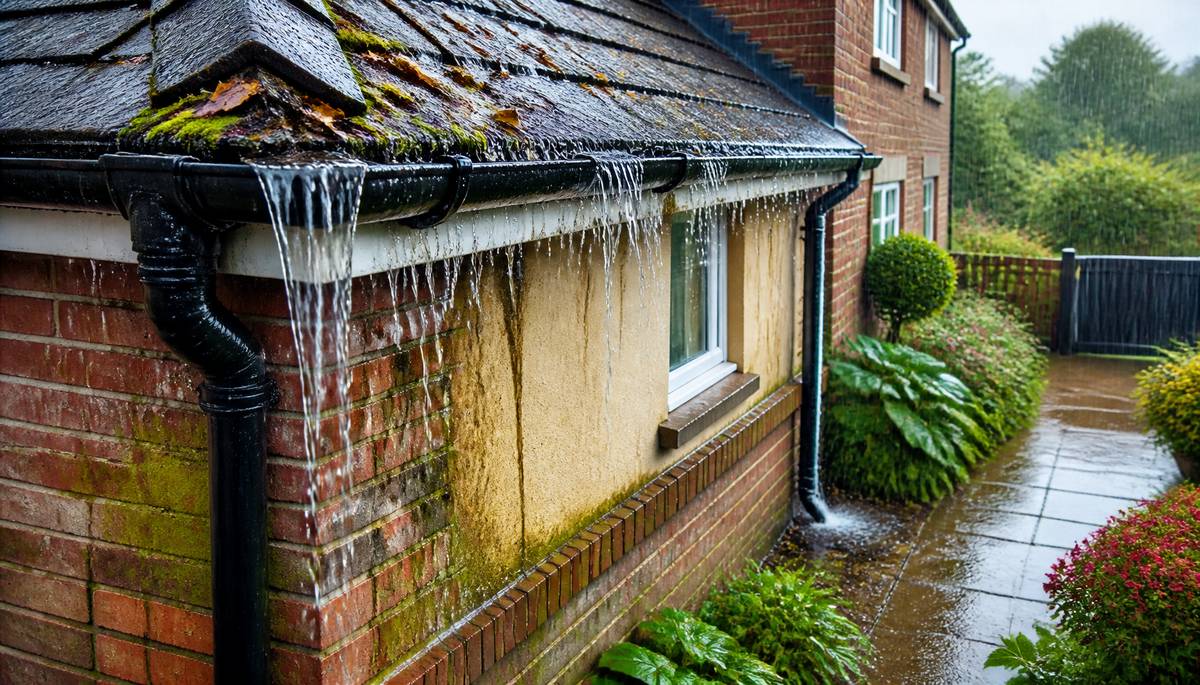 A gutter can cause an impressive amount of trouble for something that spends most of its working life hanging quietly from the edge of a house. When everything is functioning properly, rain lands on the roof, travels down the slope, enters the gutter and disappears through the drainage system. Nobody gives this arrangement much thought. Let a handful of leaves, a cracked joint or an unfortunate slope interfere with proceedings, however, and water begins exploring alternative career opportunities.
Problems with guttering are particularly deceptive because the resulting damp may appear some distance from the original fault. A wet patch on an upstairs wall naturally raises suspicions about the roof. Damp closer to ground level may prompt fears about rising damp. Yet the real culprit can sometimes be rainwater repeatedly spilling from a gutter and soaking a section of external wall.
Following the Water Rather Than the Stain
Water rarely respects the neat boundaries of building components. An overflowing gutter can saturate brickwork, render and mortar before moisture gradually finds its way towards the interior. Damaged gutter joints can produce concentrated streams that strike exactly the same section of wall whenever it rains.
Position matters too. If guttering sits too low, rainwater travelling quickly down a pitched roof may shoot straight over it. If it tilts incorrectly, water can collect at one end instead of moving towards the downpipe. Older guttering may also sag between brackets, creating miniature ponds that were definitely not included in the original architectural plans.
This is why identifying the source of damp requires more than looking at the damp itself. The location of the stain provides evidence, but understanding what happens immediately outside and above that area can reveal much more.
Heavy Rain Is an Excellent Detective
One of the simplest ways to investigate suspicious guttering is to observe the building during sustained rain while remaining safely at ground level. Problems that remain invisible on a dry afternoon can become spectacularly obvious once enough water arrives.
Watch for water pouring over gutter edges, dripping steadily from joints or running down fascia boards. Look for unusually wet sections of masonry beneath gutters and around downpipes. A dark vertical streak on an outside wall can indicate that water has been following the same unwanted route repeatedly.
Downpipes deserve attention as well. A blockage can cause water to back up until the gutter overflows, while a cracked or disconnected pipe may dump considerable quantities of rainwater directly against the building. During a serious downpour, one faulty connection can behave less like drainage and more like somebody has installed a small waterfall against the house.
When a Roof Leak Is Not a Roof Leak
Damp appearing near ceilings or at the top of an external wall often leads homeowners to assume that roofing materials have failed. Sometimes that diagnosis is correct, but overflowing gutters can create remarkably similar symptoms.
Water escaping behind guttering may reach fascia boards, roof timbers or the upper masonry of the building. Persistent exposure can eventually cause timber decay and damage finishes as well as creating internal damp patches. The longer the problem continues, the less useful it becomes to think of the gutter and roof as entirely separate systems. One is responsible for collecting what the other sheds, and trouble begins when that handover fails.
Why Gutter Damp Can Look Like Rising Damp
Moisture near the bottom of an internal wall can create another misleading diagnosis. Rising damp is often blamed when staining, peeling paint or damaged plaster appears close to floor level, but rainwater from defective drainage can produce symptoms in a similar area. If an overflowing gutter continually drenches an external wall, or a damaged downpipe deposits water beside the foundations, moisture may penetrate laterally rather than rise from below.
Clues can often be found outside. Moss growth, green staining, crumbling mortar or consistently darker masonry beneath a gutter may indicate repeated saturation. Splash marks around the base of a downpipe can also reveal where large amounts of water are landing. If the damp becomes noticeably worse after prolonged rain, defective rainwater drainage deserves investigation before anyone starts enthusiastically removing half the plaster.
Persistent moisture should not be ignored. Saturated masonry takes time to dry, particularly during colder months, and repeated wetting can damage finishes and contribute to deterioration of mortar, render and timber. Correctly identifying the source matters because treating an internal wall without stopping the incoming water merely hides the evidence temporarily.
Small Maintenance That Prevents Large Problems
Gutters benefit from remarkably uncomplicated maintenance. Leaves, twigs, moss and other debris should be removed periodically, particularly after autumn or periods of severe weather. Properties surrounded by trees may need more frequent attention because trees have an extraordinary ability to place their leaves precisely where homeowners would least like them.
Visible joints, brackets and downpipes can also be checked from ground level for obvious movement or damage. Sagging sections deserve attention because gutters require an appropriate fall towards their outlets. Water sitting permanently in one section may indicate that brackets have moved or the gutter has distorted.
It is also worth checking what happens at the bottom of each downpipe. Rainwater needs somewhere sensible to go. A perfectly functioning roof and beautifully clean gutter achieve surprisingly little if the downpipe empties into a blocked drain or pours water directly beside the wall.
Cleaning gutters can involve working at height, so accessibility matters. Where safe access is difficult, professional cleaning or inspection is preferable to improvising with an unstable ladder. Damp walls are inconvenient; arriving unexpectedly in the flowerbed from first-floor height is considerably more so.
Keeping Trouble in the Gutter Where It Belongs
The useful lesson is that roofs, gutters, walls and drainage should be considered as parts of the same rainwater-management system. A problem at one point can create symptoms somewhere else, sometimes making the eventual diagnosis surprisingly confusing.
Regular visual checks can prevent many of these problems from developing. After heavy rain, look at how water leaves the roof, whether gutters are overflowing and whether downpipes are discharging properly. During dry weather, inspect accessible areas for staining, sagging, cracked joints and vegetation growth.
When internal damp appears, resist assuming that the nearest visible building component must be responsible. Water travels, follows weaknesses and occasionally seems determined to make household maintenance unnecessarily mysterious. Finding its route is often more valuable than immediately treating the place where it finally becomes visible. A few minutes spent watching the gutters during the next downpour could reveal a fault that has been quietly soaking the building for months.
|
|
