Why the Plumbing Problem Upstairs Can Appear on Your Ceiling Instead
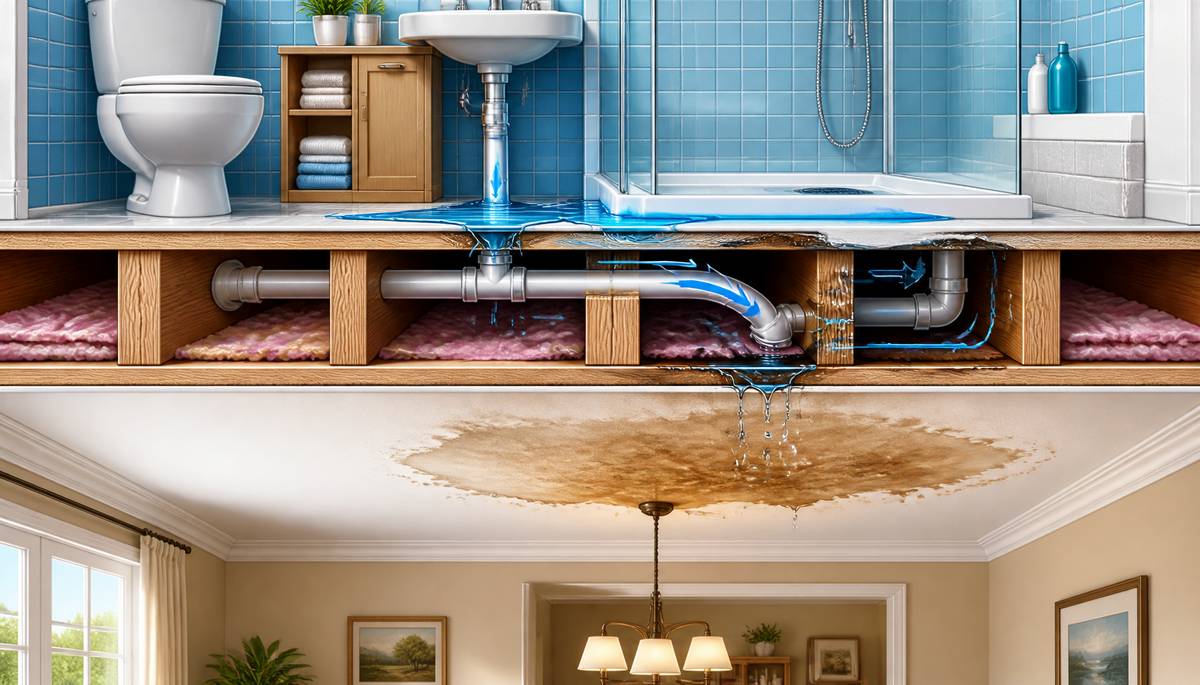 Water has a remarkable talent for turning a simple plumbing fault into a detective story. A pipe leaks beneath an upstairs bathroom, yet the first sign of trouble appears as a damp patch several feet away on the ceiling below. Naturally, everyone looks directly above the stain and assumes the culprit must be lurking there. Unfortunately, water has not agreed to follow this perfectly reasonable arrangement.
Once water escapes from a pipe, fitting, shower tray or appliance, gravity certainly influences where it goes, but gravity is only part of the story. Building materials provide plenty of alternative routes. Water can run along timber joists, follow the outside of pipes, creep across plasterboard and collect around screws, joints and electrical fittings before finally becoming visible.
That means the brown mark above the dining table may have originated beneath a bath some distance away. The ceiling is simply where the water finally ran out of road.
Water Rarely Respects the Floor Plan
Imagine a small leak beneath an upstairs basin. Rather than dripping neatly downwards, the escaping water lands on a horizontal pipe. It follows that pipe for a metre or two before dropping onto a joist, travels along the timber and eventually reaches a low point in the ceiling structure. Only then does it soak through the plasterboard.
From downstairs, the evidence points confidently towards one location. Unfortunately, the evidence is lying.
This behaviour is particularly common when only a small amount of water is escaping. A major pipe failure tends to make its intentions fairly obvious. A slow leak has considerably more opportunity to wander around unnoticed, soaking materials gradually and appearing somewhere unexpected.
Why Damp Patches Can Be Misleading
Ceilings are often the place where hidden water finally becomes noticeable because plasterboard and decorative finishes reveal moisture relatively easily. Discolouration, bubbling paint, sagging plaster or a spreading ring can all indicate water above, but they do not necessarily identify its source.
The timing of the dampness can sometimes provide better clues than its precise location. A patch that becomes darker after somebody showers upstairs may suggest a problem involving the shower enclosure, waste pipe or nearby plumbing. Dampness appearing after a bath is emptied could point towards the waste system. A mark that grows regardless of whether fixtures are being used may indicate a pressurised supply pipe leaking continuously.
These distinctions matter because blindly attacking the ceiling with a saw is not really diagnosis. It is closer to asking the building to surrender information under interrogation.
Tracing Before Cutting Saves a Lot of Trouble
Finding the true source should therefore come before opening large sections of ceilings or walls. A plumber may begin by examining the fixtures and pipework upstairs, looking for obvious moisture around joints, valves, wastes and seals. Testing individual fixtures separately can help establish exactly when water begins appearing below.
Where accessible, floorboards, inspection panels and service spaces can provide further clues without unnecessary damage. Moisture meters and other diagnostic equipment may also help establish how far dampness has travelled through concealed materials.
Careful investigation can turn what initially looks like a mysterious ceiling leak into a much smaller plumbing repair. That matters because fixing the wrong area achieves something rather impressive: you can end up with both the original leak and a new hole in the ceiling.
Joists Can Become Accidental Waterways
Timber joists are particularly good at confusing the picture. Water reaching a joist may travel along its surface rather than immediately falling through the ceiling. Small gaps between materials can also encourage capillary movement, allowing moisture to spread into areas that initially appear unrelated to the leak.
Insulation adds another complication. Some types can absorb or temporarily hold water, creating a reservoir above the ceiling. The original leak might be intermittent, yet the ceiling below can remain damp because trapped moisture continues working its way down long afterwards. This is one reason the appearance of a stain does not always coincide neatly with the moment water escaped.
Pipework itself can provide another route. Water running down the outside of a pipe may pass through floors and emerge around a fitting on a lower level. The pipe then receives all the suspicion despite potentially being perfectly sound at the point where the water becomes visible.
Not Every Upstairs Leak Comes From a Pipe
It is also worth remembering that bathrooms contain plenty of opportunities for water to escape without an actual pipe bursting. Failed silicone around a bath, deteriorated shower seals, damaged grout, loose waste connections and overflowing fixtures can all send water beneath flooring.
Washing machines and dishwashers located upstairs can create similarly deceptive symptoms. A slightly loose hose connection may leak only while the appliance is operating. By the time somebody notices the ceiling downstairs, the machine has finished its cycle and everything upstairs may appear perfectly dry.
This makes observation useful. Recording when a patch changes, which fixtures were recently used and whether the problem appears during rainfall can help narrow the possibilities considerably. A little detective work is generally cheaper than enthusiastically dismantling half the house.
Why Finding the Source Matters
Persistent moisture is more than a cosmetic nuisance. Plasterboard can deteriorate, timber can remain damp and decorative finishes may fail repeatedly if the underlying cause is not corrected. Electrical fittings in affected areas also deserve particular caution. Water appearing near lights, wiring or other electrical equipment should never be treated as merely an inconvenient stain.
Once the leak itself has been repaired, affected materials also need sufficient time to dry. Painting immediately over a damp patch may hide the evidence temporarily, but moisture has an irritating habit of requesting a second appearance. Depending on the severity and duration of the leak, damaged plasterboard, insulation or other materials may require further attention.
Ceiling the Deal
A damp ceiling tells you something important, but it does not necessarily tell you where the plumbing problem is. The visible stain is often simply the final stop on a journey that began somewhere above and several feet away.
Following that journey backwards is usually more sensible than assuming the leak sits directly over the damage. Pipes, joists, flooring, insulation and gaps within the structure can all redirect water before it finally announces itself.
Accurate tracing therefore protects more than the plumbing. It can prevent perfectly innocent ceilings, walls and floors from being opened in the search for a leak that was never behind them in the first place. Water may be difficult to interrogate, but with careful investigation, eventually it gives up the source.
|
|
