Why Pests Keep Coming Back Even After You Think You've Solved the Problem
 The suspicious thing about pests is that they never seem to understand when the meeting has ended.
You deal with the ants, block one mouse hole, spray where you saw activity, clean the kitchen, and enjoy three peaceful days of victory. Then, just as you begin to trust your own home again, something scuttles, buzzes, scratches, or appears near the biscuit tin with the confidence of a tiny landlord.The Visible Problem Is Often Only the Reception Desk Most homeowners react to the pest they can see. That makes sense. Nobody discovers ants on the worktop and thinks, “What a fascinating structural investigation this will become.” The immediate urge is to remove the invaders and restore order.
The problem is that visible pests are often only a sign of a larger issue. A few insects in the kitchen may point to a nest nearby. A mouse in the garage may be part of a route that has been used for weeks. Wasps appearing around one part of the house may be connected to a hidden nest rather than a random act of winged nonsense.
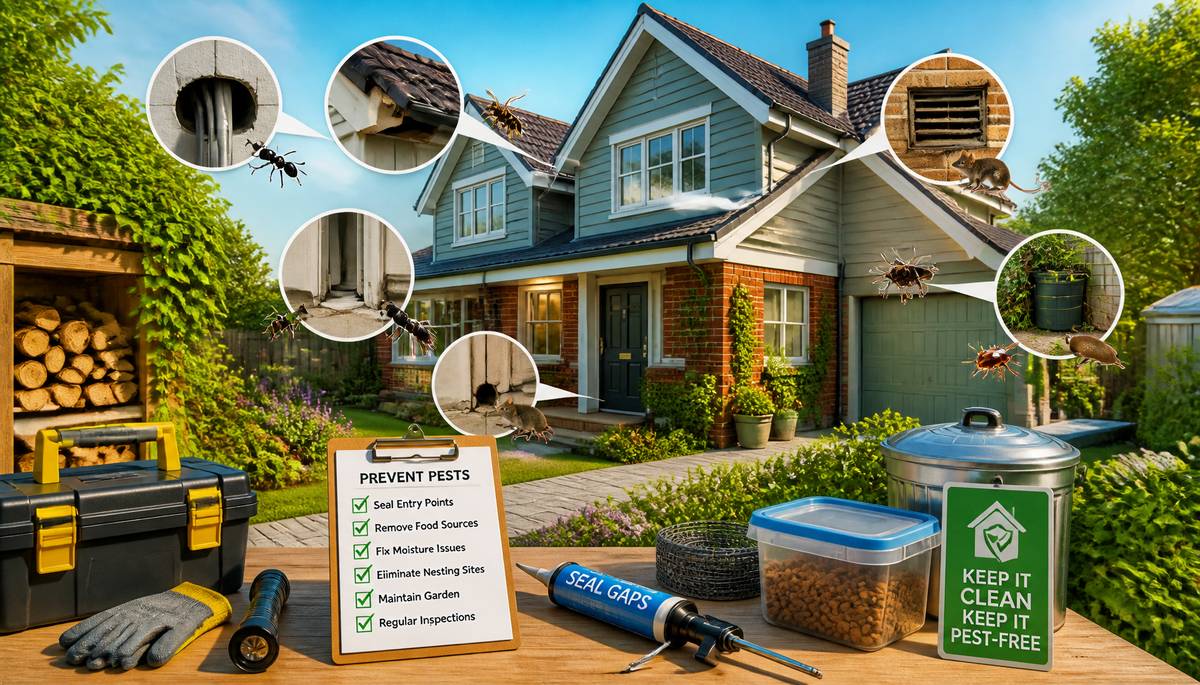
Treating only the visible activity can reduce the problem briefly without solving the reason it happened. It is a bit like mopping up water while the tap is still running, except the tap has legs and possibly whiskers.Entry Points Are Easy to Miss Pests do not need a grand entrance. They are not arriving with luggage, a doorbell, and opinions about the hallway paint. Many only need tiny gaps around pipes, vents, brickwork, windows, rooflines, drains, or poorly sealed doors.
Rodents can squeeze through surprisingly small openings. Insects can use cracks that look harmless to the human eye. Once a route works, pests may keep using it until it is properly blocked.
Commonly missed access points include: - Gaps around utility pipes and cable holes
- Damaged air bricks or vents
- Loose roof tiles, fascia boards, or soffits
- Cracks around window frames and door thresholds
- Openings around drains, garages, sheds, and outbuildings
Food Sources Keep the Invitation Open Even a clean home can accidentally provide food. Crumbs under appliances, pet food left out overnight, unsealed bins, bird seed, fallen fruit, and food stored in thin packaging can all keep pests interested.
This is where prevention becomes more useful than repeated treatment. Store dry goods in sealed containers, clean behind appliances occasionally, empty bins regularly, and avoid leaving pet bowls down for long periods. The aim is not to turn the house into a museum where nobody may eat a sandwich. It is simply to make life less convenient for unwanted guests.Moisture Can Be the Hidden Magnet Many pests are drawn to damp areas. Leaky pipes, condensation, blocked gutters, poor ventilation, damp basements, and soggy garden debris can create ideal conditions for insects and other pests to settle in.
A treatment may remove the current activity, but if the moisture remains, the property can keep attracting new visitors. Damp timber, dripping taps, and humid storage areas are especially worth checking. Fixing water problems may not feel as dramatic as defeating a pest outbreak, but it is often one of the most powerful long-term moves a homeowner can make.Hidden Nesting Sites Stay Active
Many infestations continue because the nesting site was never discovered. Pests are remarkably good at choosing locations that people rarely inspect. Loft insulation, cavity walls, behind kitchen units, beneath decking, inside sheds, under floorboards, and dense garden planting can all provide safe places to breed and expand their numbers.
If only the pests travelling in and out are treated, those remaining at the nest simply continue the cycle. Before long, fresh activity appears and it can feel as though the original treatment achieved nothing at all. In reality, it may have reduced the numbers significantly, but never reached the source.
Finding and eliminating nesting sites is often the difference between a temporary improvement and a lasting solution.Incomplete Treatments Leave Survivors Behind
Some pests require more than a single treatment. Eggs may survive even when adult insects do not. Rodent populations may be reduced while a few individuals remain hidden. Certain species also have life cycles that mean activity appears to stop before returning weeks later.
For that reason, following the recommended treatment schedule is important. Skipping follow-up visits or abandoning preventative measures too early can allow surviving pests to rebuild their population surprisingly quickly.
It can be frustrating to think a problem has gone, only to discover it has merely been enjoying a brief holiday.The Garden Can Be Part of the Story
Homeowners naturally focus on what is happening indoors, yet the outside environment often explains why pests keep arriving in the first place.
Overgrown vegetation touching exterior walls, stacked firewood, overflowing compost bins, standing water, neglected gutters, and accumulated garden waste all create attractive habitats. Once pests establish themselves outside, finding a route indoors becomes much easier.
Simple maintenance can dramatically reduce the chances of reinfestation. Keeping shrubs trimmed away from walls, removing unnecessary clutter, maintaining drainage, and storing materials neatly all make the property less appealing.
A tidy garden may not win awards from passing squirrels, but that is rarely considered a serious disadvantage.Prevention Usually Costs Less Than Repetition
Repeatedly reacting to pest activity often becomes more expensive than addressing the underlying causes. Small repairs, improved storage, moisture control, and sealing entry points may require some effort initially, but they reduce the likelihood of facing the same problem every few months.
A preventative approach typically includes:
- Regular inspections around the property's exterior
- Prompt repair of leaks and damp problems
- Careful food storage and waste management
- Sealing gaps, cracks, and damaged vents
- Monitoring lofts, garages, sheds, and other less frequently visited areas
- Seeking professional advice when infestations appear persistent or widespread
Thinking about why pests arrived is usually far more productive than focusing only on how to remove the latest ones that have appeared.Bugging Off for Good
The most successful pest control strategies look beyond the insects, rodents, or other unwelcome visitors that happen to be visible today. Lasting results come from understanding what attracted them, how they entered, where they are living, and what continues to support their presence.
Every sealed gap, repaired leak, removed food source, and eliminated nesting area makes your home progressively less attractive to future infestations. While no property can be guaranteed to remain completely pest-free forever, tackling the root causes rather than repeatedly responding to the symptoms gives homeowners the best chance of keeping unwanted visitors from making themselves comfortable again.
|
|